

You might not be aware, but when you start your car, a persistent sulfur smell could be a silent herald of a dying battery. When you notice this along with dimming headlights or a slow crank, it’s your cue to check under the hood.
Corrosion on the battery terminals and a series of clicks during ignition are also telltale signs that shouldn’t be overlooked.
Addressing these issues early can safeguard you from unexpected troubles down the road. So, what should you do next when these signs appear? Let’s explore your options and the steps to guarantee your vehicle’s reliability.
Dimming Headlights
If your headlights are dimming, your car battery may be losing its ability to hold a charge effectively. This often overlooked symptom is a critical warning sign of a failing car battery, suggesting that there might be insufficient power to keep your car’s electrical components running smoothly.
Dimming headlights can be more than just an inconvenience; they’re a potential safety hazard, particularly in low visibility conditions where maximum illumination is essential.
Notice if your headlights grow less bright or start to flicker. Your car tells you the battery is weakening and struggling to meet the energy demands. A weakening battery needs immediate attention because it risks complete failure, which can leave you stranded.
You’re not alone in this. Many drivers experience dim headlights, a shared challenge that brings us together in forums, garages, and discussions around maintaining vehicle health.
Take action by checking your battery’s charge and ensuring it functions properly. Staying proactive is important to avoid the risks associated with dim headlights.
Ignition Clicks
When you turn the key and hear only a series of clicks, your car battery is likely struggling to provide enough power to start the engine.
This clicking sound you’re hearing is a clear indicator that the battery has insufficient power to turn over the engine, and it’s more than just a slow engine start it’s a warning sign that shouldn’t be ignored.
Here’s what you can do if you experience repeated clicking:
- Check the Battery Charge: Use a voltmeter to measure the battery’s voltage. If it reads below 12.4 volts, the battery is likely low on power.
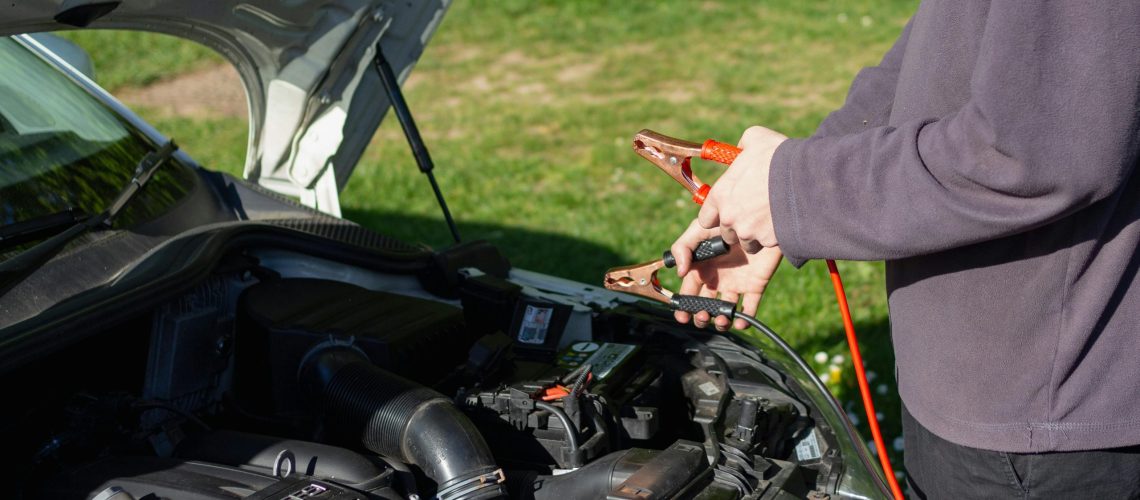
- Attempt a Jump Start: If the battery is low, jump-start your car. This can help you get moving, but remember, it might be a temporary fix.
- Inspect Battery Connections: Make sure the battery terminals are clean and tight. Loose connections can also lead to insufficient power delivery.
Corrosion on Terminals
Noticing a blue-green powder or crystal-like substance on your battery terminals is a critical sign of battery issues that require immediate attention. This blue buildup, known as terminal corrosion, is more than a mere cosmetic nuisance; it signifies deeper electrical problems that could leave you stranded.
Corrosion on terminals typically manifests where the battery cable connects to the terminals. This disruptive layer can greatly hinder your battery’s ability to conduct electricity effectively. When you see this, it’s not just a signal to clean up; it might very well mean your battery’s days are numbered.
You might think that simply cleaning off the corrosion will fix the issue. However, while removing the blue-green powder temporarily restores some functionality, cleaning may not solve the underlying problem. Terminal corrosion often indicates a need for replacement, as the damage could already be too extensive for a simple cleanup.
Sulfur Smell From Battery
You should immediately address any sulfur smell from your car battery, as it indicates leaking acid. This odor, often compared to rotten eggs, is a clear signal from your vehicle that it’s time for some attention.
Don’t ignore this as it points directly to a dying car battery, which can lead to more significant issues down the road.
Here’s what you can do to tackle this problem:
- Inspect for Visible Signs of Damage: Look for any signs of battery corrosion or acidic fumes around the battery. These are visual indicators that support the presence of a sulfur smell.
- Test the Battery: Use a voltmeter to check the battery’s voltage. If the reading is consistently low, this confirms the battery’s declining health, often associated with the sulfur smell.
- Consult a Professional: If you’re uncomfortable handling battery issues or the signs point to severe battery deterioration, it’s wise to take your car to a professional. They can offer a detailed assessment and replace the battery if necessary.
Slow Engine Crank
If your engine takes longer to start than usual, the car battery is likely failing, a condition often signaled by a slow engine crank. This sluggish sound during the engine start isn’t just an inconvenience; it’s an important early warning sign of potential battery deterioration.
When you turn the key and are met with a slow cranking sound, it means that the battery is struggling to provide sufficient power to get your engine running.
Don’t ignore this symptom. Longer cranking time indicates that your battery could be on the brink of complete battery failure. Addressing these signs early is crucial to avoid being stranded with a non-starting vehicle.
Here’s what you can do:
First, check the battery terminals for any signs of corrosion, which can also contribute to poor battery performance. If the terminals are clean and you’re still experiencing issues, it’s wise to have your battery tested by a professional.
They can assess whether it’s time for a replacement, ensuring you remain part of the community of drivers who understand the importance of routine vehicle maintenance.
Don’t let a failing car battery disrupt your day take action early.
Conclusion
Recognizing early signs like dimming headlights or a slow engine crank can save you from unexpected troubles. Take Jane’s case: she noticed her car lights flickering and promptly checked her battery, discovering corrosion on the terminals. Quick action prevented a breakdown during her rural commute.
Don’t ignore these alerts; regular checks and timely car battery maintenance are essential for safe and reliable driving. Stay vigilant and proactive to guarantee your vehicle remains in top condition.